
Logistics & Supply Chain
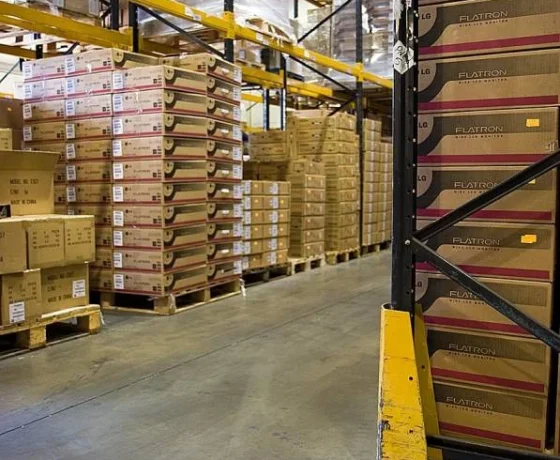
Introduction
At Netvurq, we empower logistics and supply chain businesses with intelligent, end-to-end IT solutions that drive efficiency, visibility, and agility. In an industry where speed, accuracy, and coordination are critical, technology plays a vital role in optimizing operations and staying competitive.
We deliver customized digital solutions for fleet management, warehouse automation, inventory control, real-time tracking, route optimization, and demand forecasting. Our systems are designed to integrate seamlessly with existing infrastructure while offering the scalability to support growth and global operations.
Whether you’re managing a local distribution network or a complex global supply chain, Netvurq provides the digital backbone that keeps your business moving—faster, smarter, and more connected.
Steps
Supply Chain Assessment
Understand the client’s supply chain structure (transportation, warehousing, distribution, procurement, etc.)
Analyze current systems, workflows, pain points, and KPIs
Identify bottlenecks (e.g., manual processes, lack of visibility, inventory issues)
Solution Scope & Objectives
Define key goals such as: Reducing delivery time, Optimizing inventory, Improving shipment tracking, Enhancing data visibility and reporting
Determine required modules (e.g., TMS, WMS, ERP integration, forecasting tools)
System Design & Architecture
Design a scalable, modular system architecture
Ensure compatibility with third-party logistics platforms, ERP, CRM, and finance systems
Incorporate APIs for data sharing with suppliers, carriers, and customers
Technology Stack & Tools
Select technologies based on project needs: for real-time tracking, for demand forecasting and route optimization, Blockchain for supply chain transparency, RFID/Barcode systems for inventory control
Decide on cloud vs. on-premise deployment
Development & Integration
Build and customize modules such as: Warehouse Management System (WMS), Transportation Management System (TMS), Inventory control and tracking dashboards, Order and vendor management portals
Integrate real-time GPS tracking and predictive analytics for logistics
Testing and Quality
Perform end-to-end testing on: Order processing, Shipment tracking, Inventory updates, System integrations
Ensure performance under high transaction volumes
Deployment & User Training
Roll out the solution in phases or across the full supply chain network
Train staff on new tools: warehouse teams, logistics coordinators, procurement officers
Provide technical documentation and support guides
Monitoring and Support
Set up dashboards and alerts for real-time logistics performance
Enable predictive maintenance and risk monitoring (e.g., delays, stockouts)
Offer 24/7 support and system maintenance
Analytics and Optimization
Use analytics tools for route planning, warehouse efficiency, and vendor performance
Implement AI models for demand forecasting and cost reduction
Regularly analyze performance and make strategic recommendations
Innovation and Scalability
Integrate emerging technologies (e.g., drones, autonomous delivery, advanced robotics)
Scale the system as business grows (multi-warehouse, multi-country, high volume)
Adapt solutions based on market trends and supply chain disruptions